What The Service Involves
Automatic gates are moving machinery, not simply a manual gate with a motor added. The design must consider the gate, the drive, the surrounding structure and the people who might approach it. We start with how vehicles and pedestrians use the entrance before discussing appearance, automation type or the method of entry control.
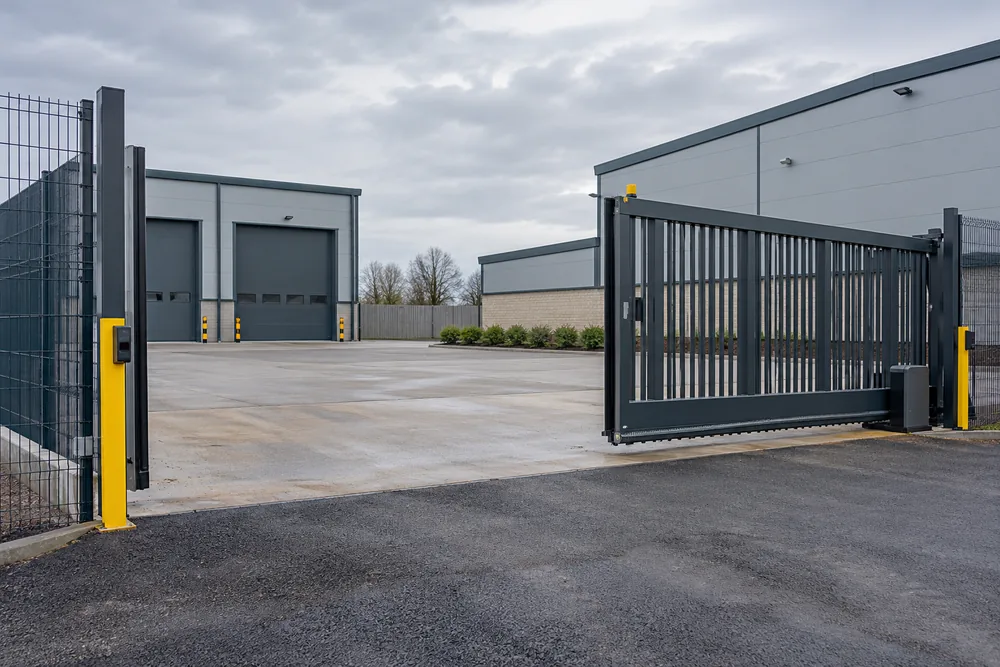
A sliding gate needs suitable run-back space and a safe arrangement around its travel. Swing gates need clearance throughout their movement and attention to changes in ground level. The physical condition of posts, foundations, hinges and the gate leaf can determine whether existing equipment is suitable for automation or needs replacement first.
A System That Fits The Building
Safety measures must address the actual hazards at the site. Crushing, trapping, shearing and drawing-in risks can occur beyond the leading edge, including around hinges and the run-back area. Safety edges, protective devices, guarding and suitable control logic may all be relevant, with commissioning checks validating how the complete installation behaves rather than relying on individual component labels.
A vehicle entrance should not invite pedestrians to use a gap that becomes dangerous when the gate moves. Where appropriate, a separate pedestrian entrance can provide a clearer route. Consider visibility for drivers, delivery vehicles waiting outside and what a visitor should do when nobody answers the intercom, so convenience does not undermine the safety design.
Control the entrance. Consider every movement.
When To Review Your Security
Request a gate assessment before automating an existing entrance, changing a drive unit or returning an unreliable installation to service. Impact damage, corrosion, uncontrolled movement and failed safety devices need competent attention. If a gate may be unsafe, keep people away and arrange assessment rather than repeatedly operating it to see whether the fault disappears.
Standards And Responsibilities
HSE guidance explains that powered gate safety depends on the complete installation and continuing maintenance. BS EN 12453 addresses safety in use of power-operated doors and gates. The Supply of Machinery (Safety) Regulations 2008 are relevant to machinery supply, while workplace gates also carry inspection and maintenance duties under the Workplace (Health, Safety and Welfare) Regulations 1992. The Provision and Use of Work Equipment Regulations 1998 (PUWER) can apply where gates form work equipment.
Read the relevant technical guidance
How The Work Is Planned
- Review vehicles, pedestrians, delivery patterns and the gate’s surroundings. Identify trapping areas and establish the practical access and emergency arrangements.
- Survey the structure, movement clearances, foundations, power and drainage. Agree the safety measures and controls needed for this particular entrance.
- Install and commission the complete system. Test protective measures, operating logic, manual release and relevant forces using appropriate equipment and methods.
- Provide operating instructions and applicable conformity documentation. Explain safe use, emergency release and a planned maintenance schedule based on the installation and its use.
What Affects The Cost
Automatic gate costs depend on whether the project needs a new gate, structural work or automation of suitable existing equipment. Groundworks, power supply, drainage, access controls and safety measures all affect the scope. A proposal should explain those items alongside commissioning and maintenance, since an attractive gate price alone says little about the work needed for a safe working entrance.
Keep Pedestrians In The Design
Look beyond the person driving through the entrance. Visitors, contractors and children may approach a gate from directions that normal users do not expect. A risk assessment should consider those foreseeable interactions, including access to hinges, posts and the area where a sliding leaf runs back. Explain changes in how the entrance is used, such as new deliveries or shared access, because a previously suitable arrangement may need reassessment when the people or vehicles using it change.
Handover And Ongoing Care
Ask for a practical demonstration of normal use and the manual release, with instructions kept somewhere accessible to authorised people. Do not allow a safety fault to be bypassed as a convenience measure. Regular inspections should look at physical condition as well as electrical operation, because wear, impacts and changes around the gate can create new hazards.
Your Questions Answered
Can Any Existing Gate Be Automated?
An existing gate can only be automated if its structure, movement and surroundings are suitable for a safe complete installation. A competent assessment should check hinges or tracks, foundations, clearances and foreseeable pedestrian access. New motors alone cannot correct an unsafe layout, and the proposal may need structural changes, guarding or replacement equipment.
How Often Should Automatic Gates Be Serviced?
Automatic gate servicing should follow the installation’s risk assessment, use and manufacturer instructions. A heavily used commercial entrance can need different attention from a lightly used staff car park gate. Agree a written maintenance plan, keep inspection records and arrange prompt assessment after an impact or safety fault, rather than waiting for a routine visit while continuing normal operation.
For a proposal based on your building, tell us about your automatic gates requirements in Coventry.